
 Image 1 of 1
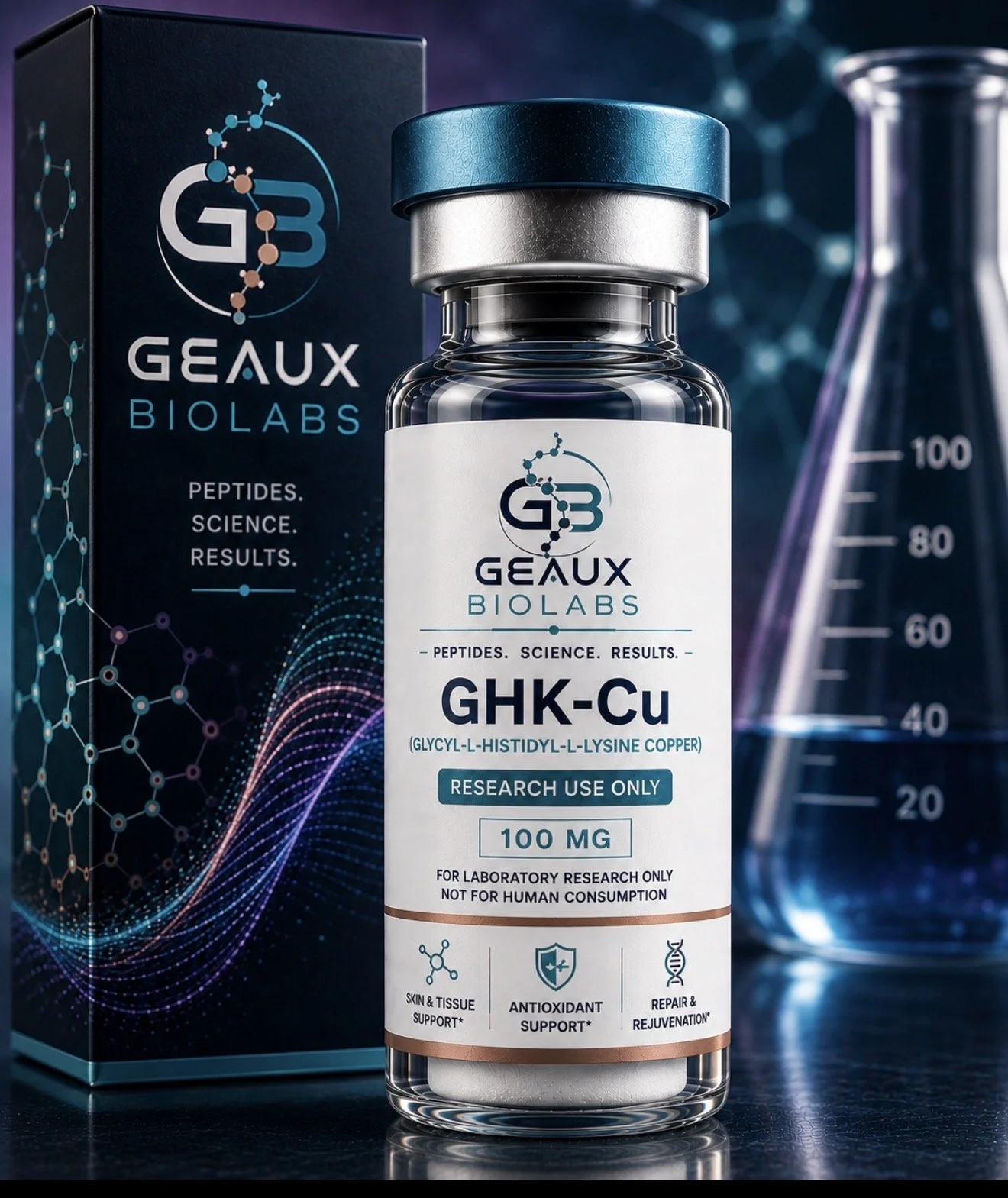
GHK-Cu (Glycyl-L-Histidyl-L-Lysine Copper)
History
GHK-Cu is a naturally occurring copper-binding peptide discovered in 1973 by Dr. Loren Pickart. It is found in human plasma, saliva, and urine, with natural levels declining as we age.
Research Use
Researchers study GHK-Cu for its potential effects on:
Skin regeneration
Wound healing
Hair growth
Collagen and elastin production
Anti-aging
Tissue repair
Clinical Highlights
Studied for promoting collagen synthesis and improving skin elasticity
Investigated for supporting wound healing and tissue regeneration
May encourage hair follicle health and hair growth in research settings
Explored for antioxidant and anti-inflammatory properties
Research continues to evaluate its role in skin health, cosmetic science, and regenerative
GHK-Cu (Glycyl-L-Histidyl-L-Lysine Copper)
History
GHK-Cu is a naturally occurring copper-binding peptide discovered in 1973 by Dr. Loren Pickart. It is found in human plasma, saliva, and urine, with natural levels declining as we age.
Research Use
Researchers study GHK-Cu for its potential effects on:
Skin regeneration
Wound healing
Hair growth
Collagen and elastin production
Anti-aging
Tissue repair
Clinical Highlights
Studied for promoting collagen synthesis and improving skin elasticity
Investigated for supporting wound healing and tissue regeneration
May encourage hair follicle health and hair growth in research settings
Explored for antioxidant and anti-inflammatory properties
Research continues to evaluate its role in skin health, cosmetic science, and regenerative