
 Image 1 of 1
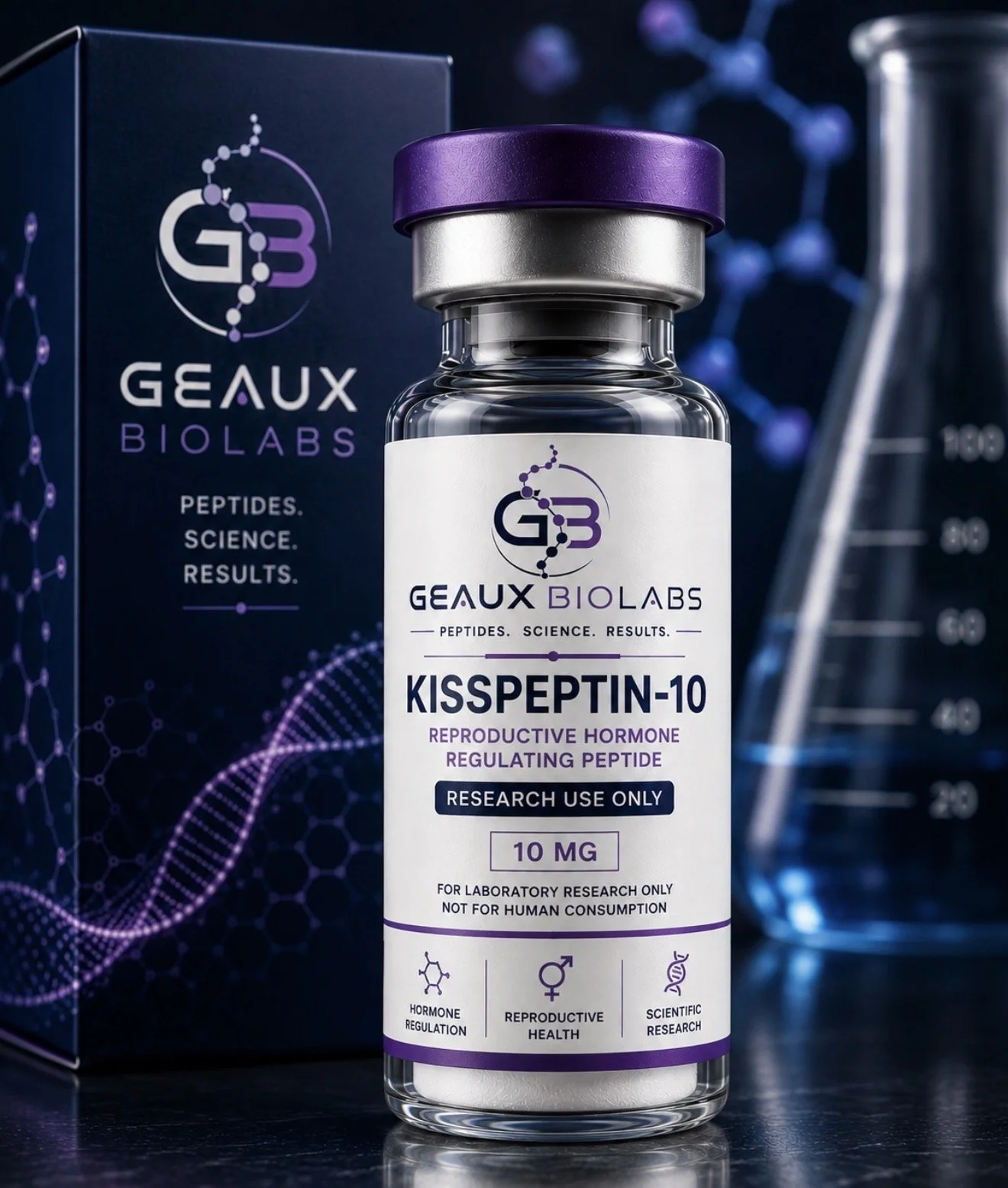
Kisspeptin-10
History
Kisspeptin is a naturally occurring peptide discovered in 1996. It plays an important role in regulating the hypothalamic-pituitary-gonadal (HPG) axis by stimulating the release of gonadotropin-releasing hormone (GnRH). Researchers have since investigated its role in reproductive health, hormone regulation, and fertility.
Research Use
Researchers study Kisspeptin-10 for its potential effects on:
Reproductive hormone regulation
Fertility
Testosterone production
Ovulation
Puberty
Endocrine function
Clinical Highlights
Studied for stimulating the release of GnRH, luteinizing hormone (LH), and follicle-stimulating hormone (FSH)
Investigated for supporting fertility and reproductive function
May promote natural testosterone production in research settings
Explored for treating certain reproductive and endocrine disorders
Research is ongoing to better understand its long-term safety and therapeutic potential
Kisspeptin-10
History
Kisspeptin is a naturally occurring peptide discovered in 1996. It plays an important role in regulating the hypothalamic-pituitary-gonadal (HPG) axis by stimulating the release of gonadotropin-releasing hormone (GnRH). Researchers have since investigated its role in reproductive health, hormone regulation, and fertility.
Research Use
Researchers study Kisspeptin-10 for its potential effects on:
Reproductive hormone regulation
Fertility
Testosterone production
Ovulation
Puberty
Endocrine function
Clinical Highlights
Studied for stimulating the release of GnRH, luteinizing hormone (LH), and follicle-stimulating hormone (FSH)
Investigated for supporting fertility and reproductive function
May promote natural testosterone production in research settings
Explored for treating certain reproductive and endocrine disorders
Research is ongoing to better understand its long-term safety and therapeutic potential