
 Image 1 of 1
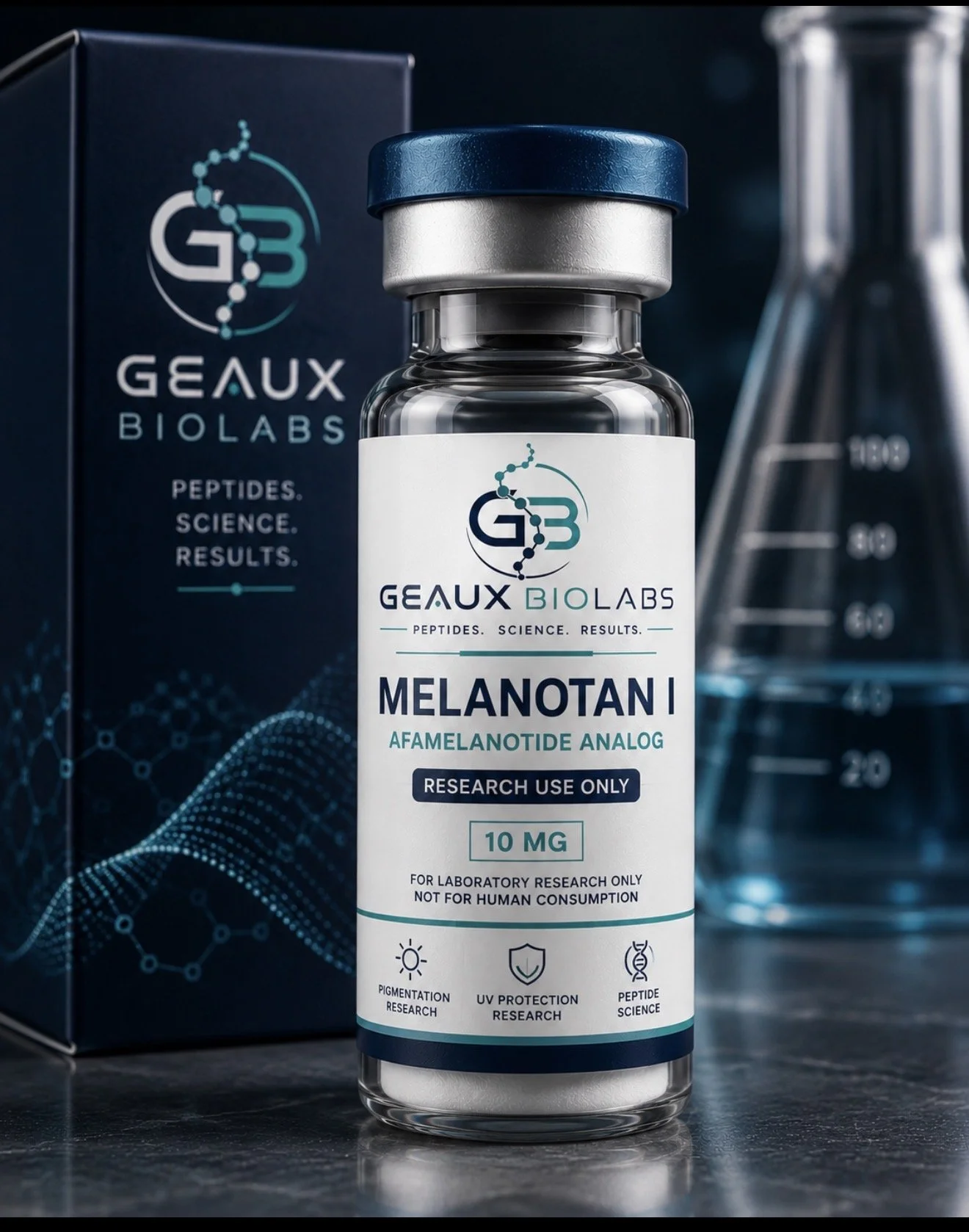
Melanotan I (Afamelanotide Analog)
History
Melanotan I is a synthetic peptide developed from alpha-melanocyte-stimulating hormone (α-MSH). It was designed to stimulate melanin production and has been studied for its effects on skin pigmentation and protection against ultraviolet (UV) radiation. A related analog, afamelanotide, has been developed for specific medical applications.
Research Use
Researchers study Melanotan I for its potential role in:
Increasing skin pigmentation (tanning)
Enhancing the skin’s natural protection against UV exposure
Reducing photosensitivity in certain conditions
Supporting melanin production
Clinical Highlights
Studied for stimulating melanin production in the skin
Investigated for reducing sensitivity to sunlight in certain disorders
May increase pigmentation with UV exposure in research settings
Generally produces a slower, more gradual tanning response than Melanotan II
Research continues to evaluate long-term safety and effectiveness
Melanotan I (Afamelanotide Analog)
History
Melanotan I is a synthetic peptide developed from alpha-melanocyte-stimulating hormone (α-MSH). It was designed to stimulate melanin production and has been studied for its effects on skin pigmentation and protection against ultraviolet (UV) radiation. A related analog, afamelanotide, has been developed for specific medical applications.
Research Use
Researchers study Melanotan I for its potential role in:
Increasing skin pigmentation (tanning)
Enhancing the skin’s natural protection against UV exposure
Reducing photosensitivity in certain conditions
Supporting melanin production
Clinical Highlights
Studied for stimulating melanin production in the skin
Investigated for reducing sensitivity to sunlight in certain disorders
May increase pigmentation with UV exposure in research settings
Generally produces a slower, more gradual tanning response than Melanotan II
Research continues to evaluate long-term safety and effectiveness