
 Image 1 of 1
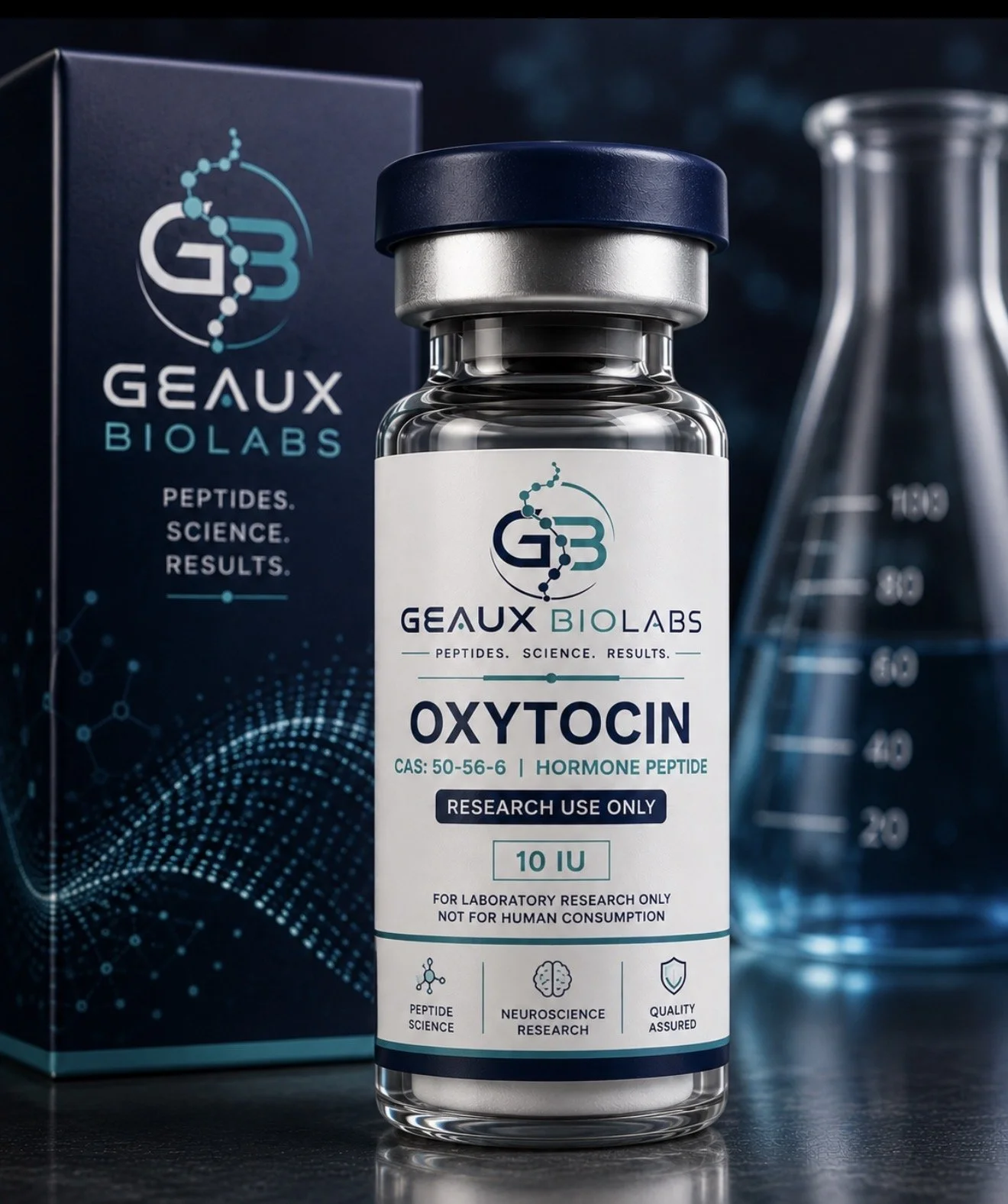
Oxytocin
History
Oxytocin is a naturally occurring peptide hormone produced in the hypothalamus and released by the posterior pituitary gland. It has long been studied for its roles in childbirth, lactation, social bonding, and nervous system function.
Research Use
Researchers investigate oxytocin for its potential role in:
Social behavior and bonding
Stress and anxiety regulation
Cognitive function
Pain perception
Wound healing
Neuropsychiatric conditions
Clinical Highlights
Studied for its effects on social interaction and emotional processing
Investigated for stress reduction and modulation of the body’s stress response
May influence memory, learning, and certain cognitive functions in research settings
Explored for its role in pain modulation and tissue repair
Research is ongoing to better understand its broader therapeutic potential
Oxytocin
History
Oxytocin is a naturally occurring peptide hormone produced in the hypothalamus and released by the posterior pituitary gland. It has long been studied for its roles in childbirth, lactation, social bonding, and nervous system function.
Research Use
Researchers investigate oxytocin for its potential role in:
Social behavior and bonding
Stress and anxiety regulation
Cognitive function
Pain perception
Wound healing
Neuropsychiatric conditions
Clinical Highlights
Studied for its effects on social interaction and emotional processing
Investigated for stress reduction and modulation of the body’s stress response
May influence memory, learning, and certain cognitive functions in research settings
Explored for its role in pain modulation and tissue repair
Research is ongoing to better understand its broader therapeutic potential