
 Image 1 of 1
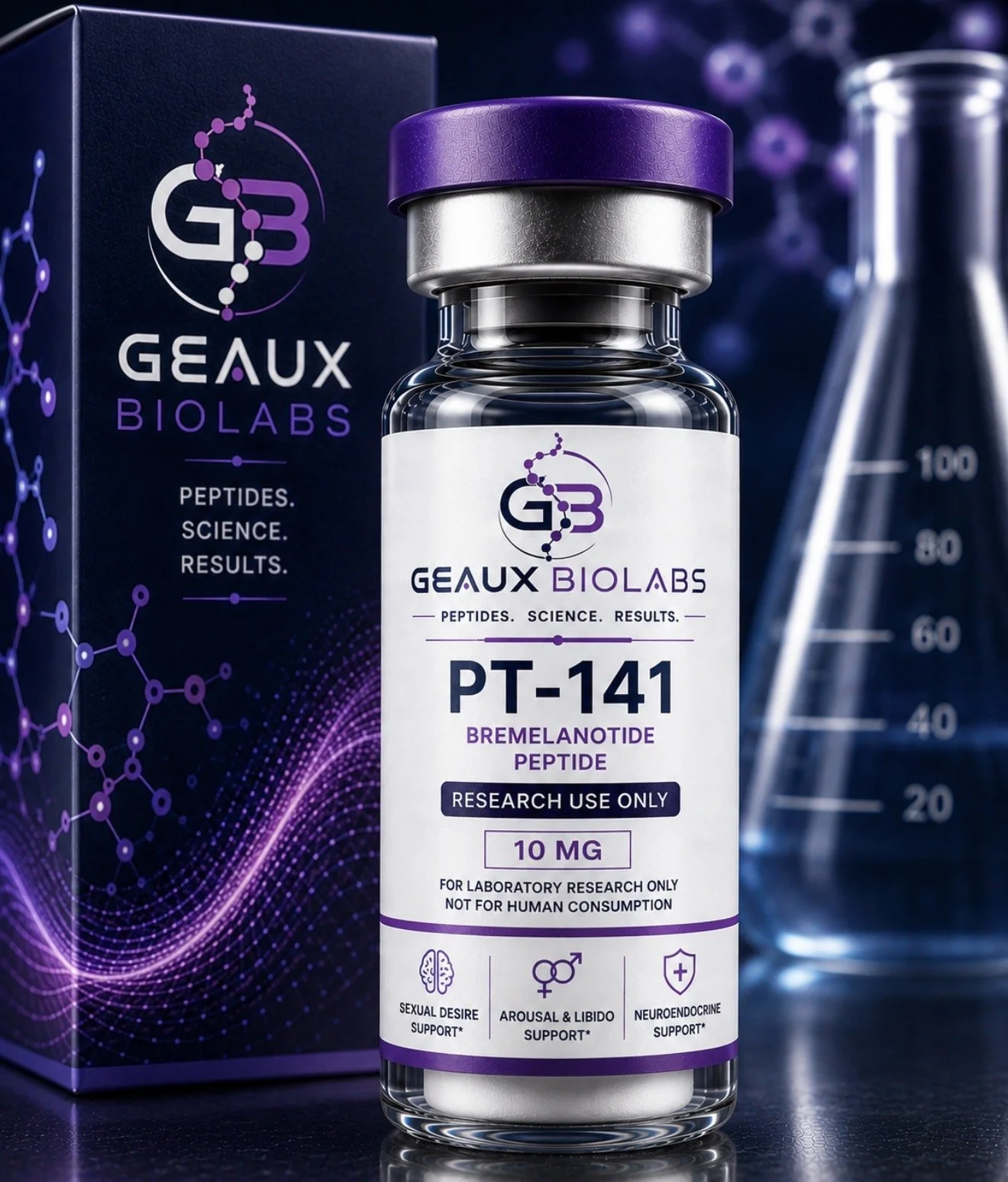
PT-141 (Bremelanotide)
History
PT-141, also known as Bremelanotide, is a synthetic peptide derived from Melanotan II. It was originally developed during research on skin pigmentation, but scientists discovered its effects on sexual desire through activation of melanocortin receptors. This led to further investigation into sexual health and arousal.
Research Use
Researchers study PT-141 for its potential effects on:
Sexual desire and arousal
Female sexual dysfunction
Male erectile function
Melanocortin receptor activation
Nervous system signaling
Clinical Highlights
Studied for increasing sexual desire through central nervous system pathways
Investigated for improving sexual arousal in both women and men
Unlike medications that primarily affect blood flow, PT-141 acts on melanocortin receptors in the brain
May improve sexual function in certain populations under clinical investigation
Research continues to evaluate additional therapeutic applications and long-term safety
PT-141 (Bremelanotide)
History
PT-141, also known as Bremelanotide, is a synthetic peptide derived from Melanotan II. It was originally developed during research on skin pigmentation, but scientists discovered its effects on sexual desire through activation of melanocortin receptors. This led to further investigation into sexual health and arousal.
Research Use
Researchers study PT-141 for its potential effects on:
Sexual desire and arousal
Female sexual dysfunction
Male erectile function
Melanocortin receptor activation
Nervous system signaling
Clinical Highlights
Studied for increasing sexual desire through central nervous system pathways
Investigated for improving sexual arousal in both women and men
Unlike medications that primarily affect blood flow, PT-141 acts on melanocortin receptors in the brain
May improve sexual function in certain populations under clinical investigation
Research continues to evaluate additional therapeutic applications and long-term safety